Guide · by age
Family game night ideas: board games for kids by age, from 3 to 93
Family game night ideas that fit the actual family at your table: board games for kids from preschool to middle school, ways to keep teenagers playing, games grandparents enjoy, and the house rules that stop a fun evening turning sour.
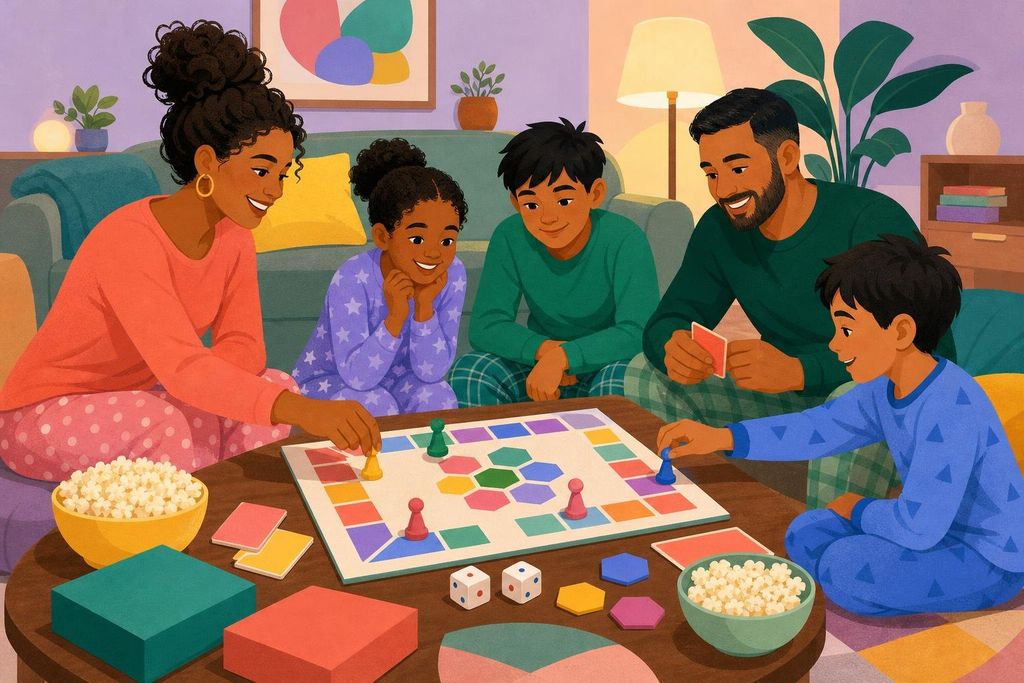
Once a weeksame night, same time, short and reliable
5 age bandsfrom preschoolers to grandparents
45 minutesis plenty on a school night
Make family game night a weekly habit
The families who keep a family game night going for years tend to share one trait: they pick a night and never renegotiate it. Friday works for many households because nobody has homework due the next morning. Sunday afternoon suits others. The particular day matters less than the fact that it repeats, so the kids start expecting it and stop treating it as a special request.
Keep school-night sessions short. Forty-five minutes of a game everyone enjoys beats two hours of a long one that ends with a tired seven-year-old in tears. Let a different person choose the game each week, including the youngest, and accept the choice even when it is the same game for the fifth time running.
National Games Week, the week of Thanksgiving, is a good moment to start the habit. In 2026 it runs from November 22 to 28, the house is often full, and the Thanksgiving table is a natural first game night for relatives who never play otherwise.
Board games for kids aged 3 to 5
At this age a game is mostly about taking turns, naming colors and counting spaces. Look for big pieces that do not fit in a mouth, no reading, and rounds that end in ten minutes. Memory-matching games, simple roll-and-move races and color-matching games with chunky pieces all qualify. Cooperative games, where everyone wins or loses together against the board, save a lot of tears.
Do not worry about strict rules. Let a four-year-old roll twice if it keeps the game going, and stop while everyone is still having fun. The real skill being learned is sitting at a table with other people and waiting for a turn, which is harder than it sounds for a preschooler.
The 2005 Top 100 list from the original National Games Week is weighted heavily toward older players, so it is not much help at this age. Most good preschool games are found by asking other parents or a librarian.
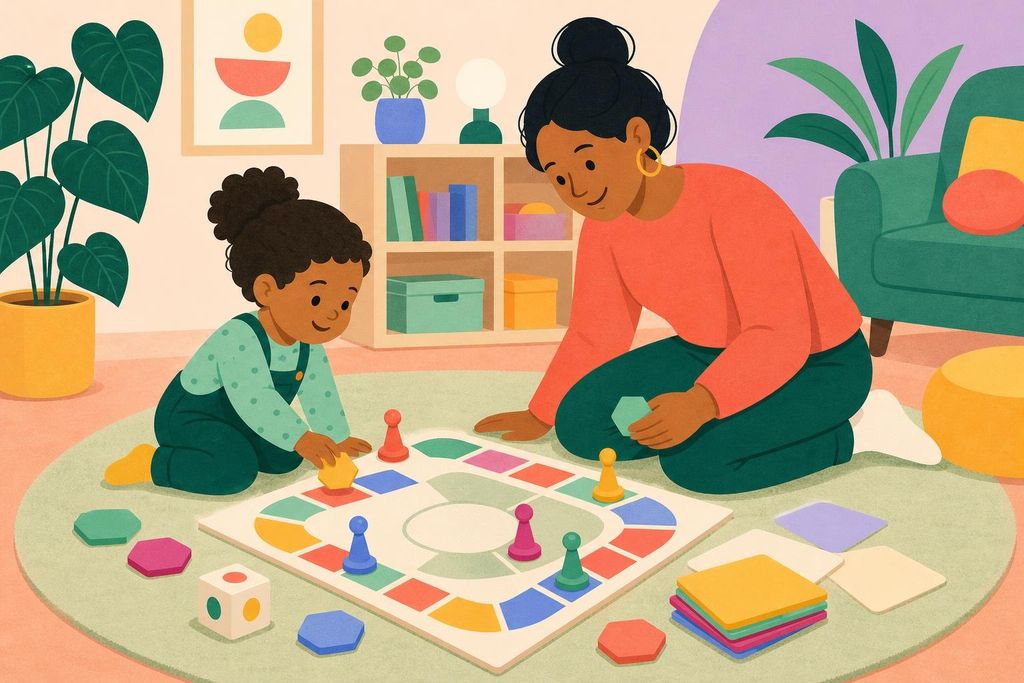
Ages 6 to 8: first real rules
Somewhere around first and second grade, children can follow a rule sheet and handle losing without the game ending in a meltdown. This is when card games such as UNO become the default, and when pattern games like SET start to show which kids have quick eyes. SET is a good leveler, because a sharp seven-year-old can beat an adult fairly.
Blokus and Tsuro both work well here. The rules take a minute to learn, every player stays in until the end, and the boards look good enough that children want to play again. Clue is a fine introduction to deduction for kids who read confidently, and a gentle way to practice keeping notes.
Reading is the dividing line. A game that needs players to read cards aloud will frustrate early readers, so pair them with an older sibling or a parent as a team until they are ready to play alone.
The original hosting tips noted that children often beat the adults. They also suggested that if a game night includes only one or two kids, the host should invite a few more, so the young ones have company of their own and are not stuck watching grown-ups think.
Ages 9 to 12: strategy arrives
Late elementary and middle school is when real strategy games open up. Ticket to Ride and Carcassonne are the classic bridges: easy to teach, quick to set up, and with enough choices that adults are not bored. Settlers of Catan adds trading and negotiation, which is excellent practice for the art of saying no politely.
Children this age also love games with a story or a world. Heroscape, a miniatures board game that was on the 2005 Top 100 list, is a strong pick for kids who like painted figures and battles. Scrabble starts to work as a family game too, especially if younger players are allowed a dictionary.
The types of board games guide explains the difference between family, strategy and cooperative games if you want to steer a ten-year-old toward a new kind. The full 2005 list is a good hunting ground for this age band.
Teenagers, and how to keep them at the table
Teenagers will play, but rarely if they are told to. The trick is giving them control. Let them choose the game, let them teach it, and let them invite a friend. A teenager explaining a game to a parent is a rare reversal of roles that most of them enjoy more than they admit.
Games with bluffing and hidden roles are a good fit. Bang! and Citadels, both on the 2005 list, reward reading other players and lying with a straight face. Munchkin and Killer Bunnies suit teens who like humor and a bit of cruelty. Some teenagers will be drawn to trading card games such as Magic: The Gathering or to role-playing games like Dungeons & Dragons, and both can become a shared hobby if a parent is willing to learn.
Phones are the hard part. A simple rule works best: phones go in a bowl for the length of one game, for everyone, adults included.
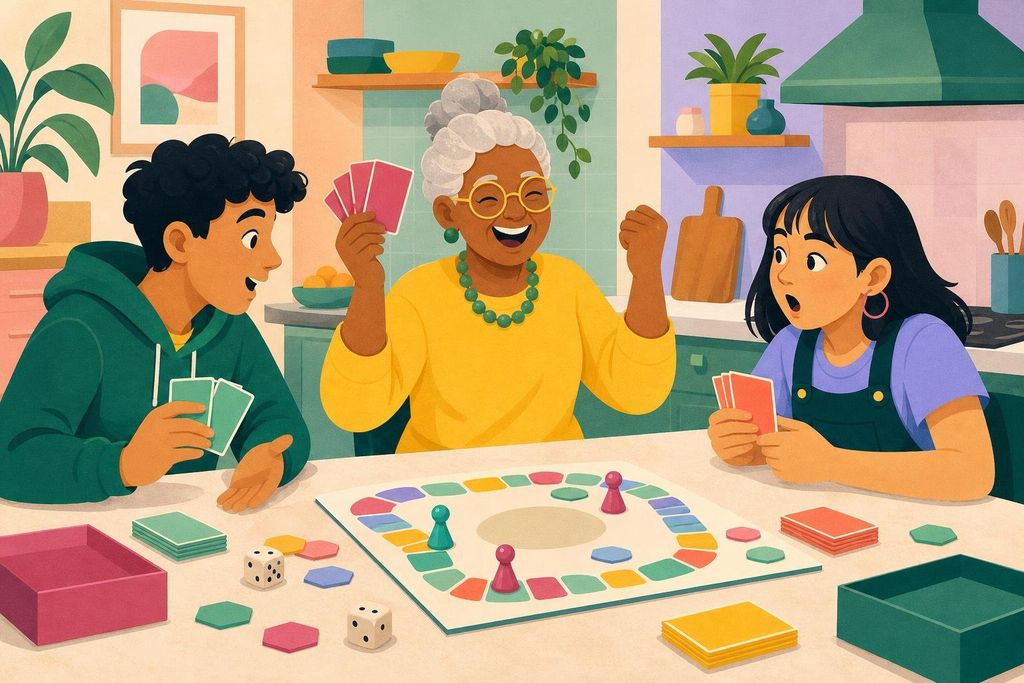
Picking games by age when grandparents join
Grandparents are often the best players at the table, with decades of card games behind them. Lean into that. Classic games they already know, such as chess, Scrabble or a trick-taking card game like Wizard, put them in the position of teacher, which young children love.
Mixed tables with ages from five to eighty work best with team play. Pair the youngest with the oldest and let them share a hand. Large print and good lighting matter more than any rule change, and a game with short turns keeps everyone involved.
Picking games by age gets easier with one simple test: if the youngest player can take a turn without help and the oldest player is still interested by the third round, the game fits.
House rules that keep the peace
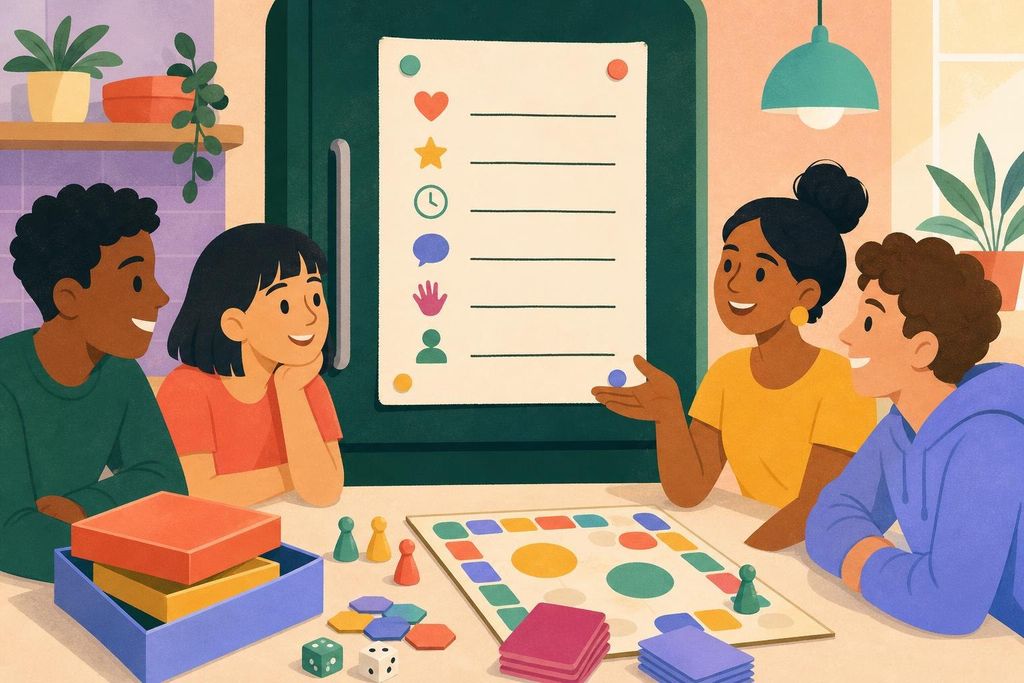
Every family that plays often ends up with a few house rules, written or not. Writing them down helps. Put them on a sheet on the fridge where everyone can see them, and add new ones when an argument repeats.
A few that work in many homes: no rule changes in the middle of a game; the person who sets up does not pack away; losers shake hands with the winner; and anyone who flips the board sits out the next game. Some families add a rule that the winner chooses the dessert, which keeps everyone trying until the last turn.
Losing gracefully is the lesson that takes longest, for children and adults alike. Parents who lose cheerfully and talk about what they would do differently next time teach it better than any speech.
More family game night ideas beyond the box
When the routine starts to feel stale, the best family game night ideas change the setting rather than the games. A few to try: a picnic game night on a blanket in the living room; a theme night where everyone dresses as a piece from the game; a championship month with a homemade trophy that moves to the winner each week; or a night where the kids cook a simple dinner and the adults clean up.
Swap a game with another family for a month, borrow a few from the library, or ask a local game store about a family open play. The library game day guide explains how many branches run family tables, especially in November, which is International Games Month. Teachers are also a good source of game recommendations; the page on games at school lists the ones often used in classrooms.
If you are wondering what all this time at the table actually gives children, the page on the benefits of board games sets out what teachers and researchers commonly point to. Most families find a simpler reason: the evening ends with everyone in the same room, still talking about the last turn.
FAQ
Questions people ask
How often should you have a family game night?
Once a week is the rhythm most families can keep. Pick the same night each week, such as Friday or Sunday afternoon, so it becomes a habit rather than a negotiation. Keep school-night sessions to about forty-five minutes. A short, reliable family game night lasts far longer than an ambitious one that only happens when everyone is free.
What are good family game night games for young kids?
For ages three to five, memory-matching games, simple roll-and-move races and cooperative games with big pieces work best. For six to eight, UNO, SET, Blokus and Tsuro are reliable picks with short rules. Choose games that end in ten to twenty minutes and do not require reading until children are confident readers.
What board games work for kids and adults together?
Ticket to Ride, Carcassonne and Blokus are easy to teach and have enough choices to keep adults interested. SET is one of the few games where a quick child can beat an adult fairly. For bigger groups, team games such as Apples to Apples or charades put children and adults on the same side.
How do you get teenagers to join a family game night?
Give them control. Let teenagers choose the game, teach it to the rest of the family and invite a friend. Bluffing and hidden-role games such as Bang! and Citadels, or humor-heavy card games like Munchkin, tend to appeal more than classic family games. A phones-in-a-bowl rule for everyone, adults included, also helps.
What house rules help a family game night go smoothly?
Simple ones that everyone agrees on before playing: no rule changes mid-game, whoever sets up does not pack away, the loser shakes the winner's hand, and anyone who flips the board sits out the next game. Write them on a sheet on the fridge and add one whenever the same argument comes up twice.
What are good family game night ideas beyond board games?
Change the setting rather than the games: a picnic game night on a blanket in the living room, a theme night in costume, a championship month with a homemade trophy, or a night when the kids cook and the adults clean up. Swapping games with another family or borrowing a few from the library keeps the shelf fresh.
What board games are good for kids aged 9 to 12?
This is when real strategy games open up. Ticket to Ride and Carcassonne are easy to teach and keep adults interested, Settlers of Catan adds trading and negotiation, and Scrabble starts to work as a family game. Kids who like figures and battles often enjoy Heroscape, a miniatures board game from the 2005 Top 100 list.
How long should a family game night last?
On a school night, about forty-five minutes is enough. A short game everyone enjoys beats a two-hour one that ends with a tired seven-year-old in tears. Weekend afternoons can run longer, and the Thanksgiving long weekend is a good time for the bigger game the family has been saving.
Updated