Guide · libraries
Game day at the library: plan a library game night for every age
Libraries have tables, chairs, a public that already trusts them and, in November, a games month of their own. Here is how to lay out the room, pick games for drop-in players, lend games without losing pieces, and find people to teach.
All NovemberInternational Games Month at libraries
4 to 6 seatsper table keeps drop-in players moving
Nov 22–28National Games Week in 2026
International Games Month and Thanksgiving week
November is already a games month for many American libraries. International Games Month is coordinated by volunteers from the American Library Association's Games and Gaming Round Table, with partner libraries in other countries, and runs for the whole of November. The International Games Month page describes how libraries take part. It began in 2007 as a single library day, took an international name in 2012, became a week in 2017 and has covered the full month since 2022.
It is a separate event from National Games Week, run by different people, but the two overlap neatly. National Games Week is the Sunday-to-Saturday week that holds Thanksgiving, which in 2026 means November 22 to 28. A library that runs games through November can make that week the high point, with a family game day on the Saturday after the holiday, when relatives are in town and looking for somewhere to go. Many libraries close on Thanksgiving Day and some on the Friday, so check your own hours before printing anything.
Setting up the room by age
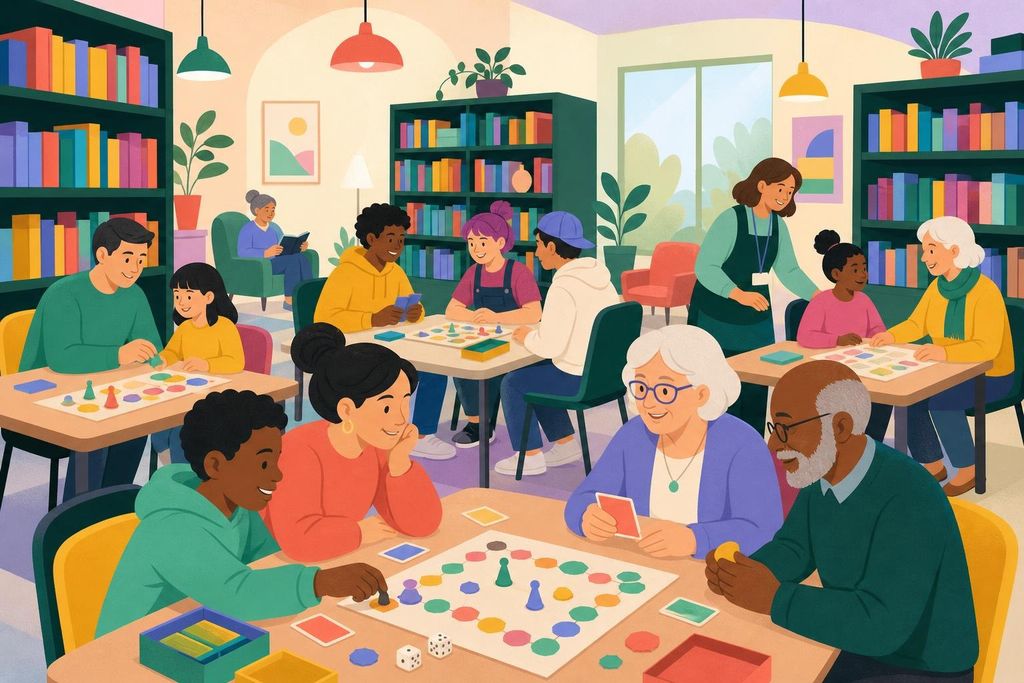
Library game nights are mostly drop-in, so the room has to explain itself. Put small children and their parents near the picture books, with low tables and big, sturdy pieces. Give teens their own corner, ideally out of earshot of the adults, with card games and a party game. Adults and seniors tend to prefer a quieter table with a strategy or word game.
Tables of four to six work best. Leave one table empty with a sign that says "Join a game here" so newcomers have somewhere to stand while a volunteer finds them a seat. A two-player abstract game on a side table gives shy visitors something to do without joining a crowd.
Choosing games for a library crowd
Drop-in players arrive at different times, so favor games that last 15 to 45 minutes and can be explained in five. Cooperative games work well with strangers because nobody has to beat the person they just met. Party games suit the last half hour, when the room is loud anyway. Long strategy games belong to a separate, advertised session for regulars.
For a sense of the options, the guide to types of board games sorts nine genres by players, time and age. Keep at least one game with no reading at all, so younger children and visitors still learning English can join in.
A first library game day needs fewer boxes than people expect. Two party games, two co-op games, a handful of family titles, a word game and a couple of quick card games will cover most visitors without overwhelming the volunteers, and a second copy of whichever game draws the longest queue saves a lot of waiting.
A sample Saturday at the library
A simple plan for a four-hour Saturday keeps volunteers fresh and gives families a reason to arrive at a particular time. Open at 1 pm with free play at every table and a volunteer at the newcomer table. At 2 pm, run a featured family game as a short demo in one corner while the rest of the room keeps playing. Around 3 pm the teen corner can start a party game bracket drawn on a whiteboard, with nothing at stake but bragging rights.
The last hour belongs to the regulars and anyone who wants a longer game. Close with fifteen minutes of packing up, counting pieces and noting which boxes went untouched. A game nobody picked in four hours rarely earns its shelf space.
Building a board game lending collection
Many public libraries now lend board games the way they lend books, and a game night is a good way to launch or grow a collection. Start with titles that survive handling: thick cardboard, few small parts and rules short enough to follow without a teacher at the table.
The main problem is missing pieces. Libraries that lend games usually tape a contents list inside the lid, bag small parts by type, and check the box at the desk when it comes back. A few count pieces by weight on a kitchen scale, which is faster than counting tokens by hand. Put the catalog record on a card in the box too, so a borrower can see what should be inside before taking it home.
Volunteers who can teach a game
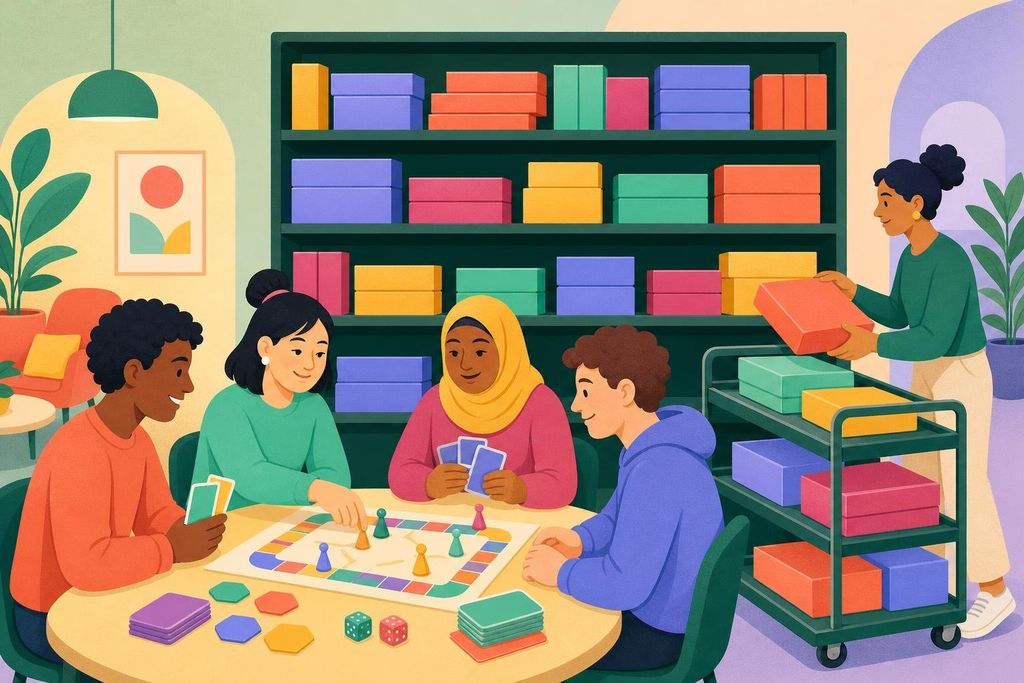
A game day lives or dies on the people explaining the rules. Local game clubs, high school game clubs and staff from a nearby game store are often happy to help, especially if they can mention their own regular nights. Give each volunteer one or two games to teach all afternoon rather than a whole shelf.
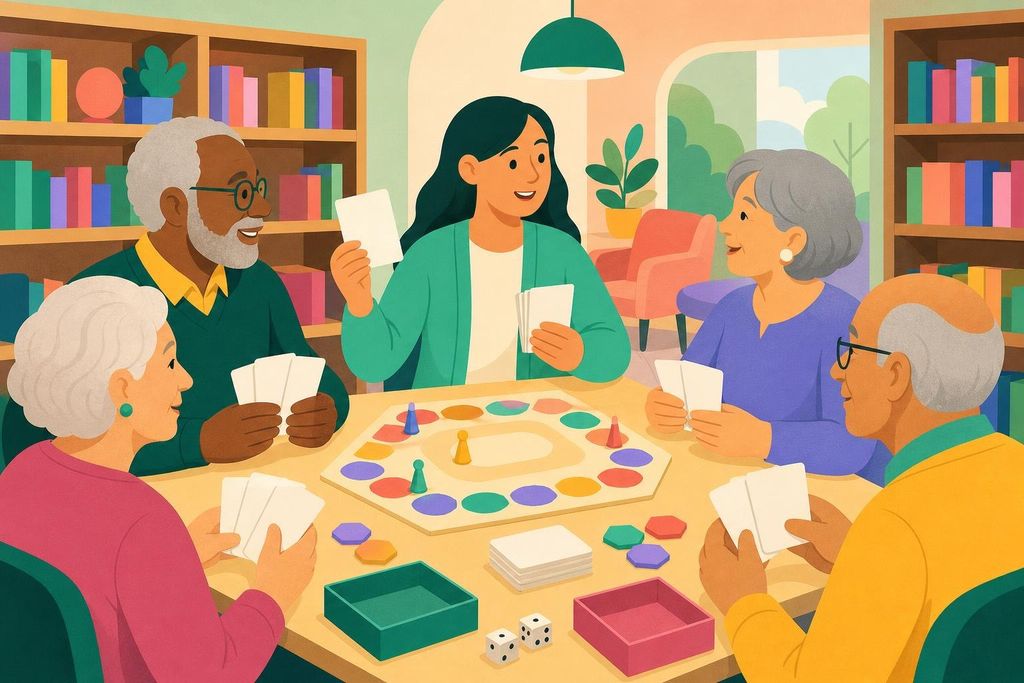
Seniors' groups are worth asking too. Older visitors who grew up on card games and dominoes often make patient teachers, and a mixed-age table is one of the things a library does better than almost anywhere else. What a regular game does for older players has its own section on board games for seniors.
The original National Games Week listed libraries among the places to host, next to homes, classrooms and community centers. Its hosting tips advised hosts to learn each game by playing it before the day and recommended at least one co-host, so someone is always free to welcome people while the host is busy playing.
Getting the word out
Put a poster at the circulation desk two weeks ahead and mention the event at story time and teen programs. Ask nearby schools to send a note home; teachers who run their own classroom game days are often glad to point families somewhere for the holiday weekend. A local game store may lend demo copies or volunteers in return for a mention.
On the day, keep a sign-in sheet that asks only which games people enjoyed, not their contact details. That list becomes next year's shopping list. For a home version of the same afternoon, the guide to hosting a game night covers invitations, food and score sheets, and the family game night ideas suggest games by age for the families who leave asking what to play next.
FAQ
Questions people ask
Can you borrow board games from the library?
At many public libraries, yes. Lending collections have grown steadily, and some libraries list games in the same catalog as books, with loan periods of one to three weeks. Ask at the desk or search the catalog for "board game". If your library does not lend games yet, a game day is a good moment to suggest it.
What is International Games Month?
International Games Month is a library event held through all of November. The same ALA round table of volunteers runs it, and libraries in other countries take part as partners. Libraries choose their own activities, from board game afternoons to video game tournaments. It grew from a single day in 2007 into the full month in 2022.
Is International Games Month the same as National Games Week?
No. International Games Month is a library event run by ALA volunteers through November. National Games Week is the Sunday-to-Saturday week of Thanksgiving, which began in 2004 as a separate national event. The week falls inside the month, so a library can mark both with one well-timed game day, such as the Saturday after Thanksgiving.
What games work best at a library game night?
Games that teach in about five minutes and last under 45 work best, because people arrive and leave at different times. Cooperative games help strangers relax, party games suit the end of the session, and one or two games with no reading let young children and English learners play. Save long strategy games for a separate session for regulars.
How do libraries stop game pieces from going missing?
Most tape a contents list inside the lid, bag small pieces by type and check each box at the desk when it is returned. Some weigh games on a kitchen scale instead of counting every token. Sturdy games with few small parts last longest, and a supply of spare dice and pawns covers the usual losses.
How do you plan a library game night?
Set up tables by age, choose games that teach in about five minutes, recruit volunteers who can each teach one or two games, and put up posters two weeks ahead. A four-hour Saturday with free play, one featured family game, a teen bracket and a last hour for longer games gives families a reason to come at a set time.
Who can volunteer to teach games at a library?
Local game clubs, high school game clubs and staff from a nearby game store are often glad to help, especially if they can mention their own regular nights. Seniors' groups are worth asking too, since older visitors who grew up on card games and dominoes often make patient teachers.
What age groups come to a library game day?
Every age, which is the point. Small children come with parents, teens look for card and party games, and adults and seniors tend to prefer a quieter strategy or word game. Giving each group its own area, plus one table marked for newcomers, keeps a drop-in room running smoothly.
Updated