Guide · 7 days
Game day at your local store: a week of game store events, day by day
Thanksgiving week puts more relatives, more days off and more idle hands in town than any other week of the fall. Here is how a local game store can fill that week, and how players can find the tables.
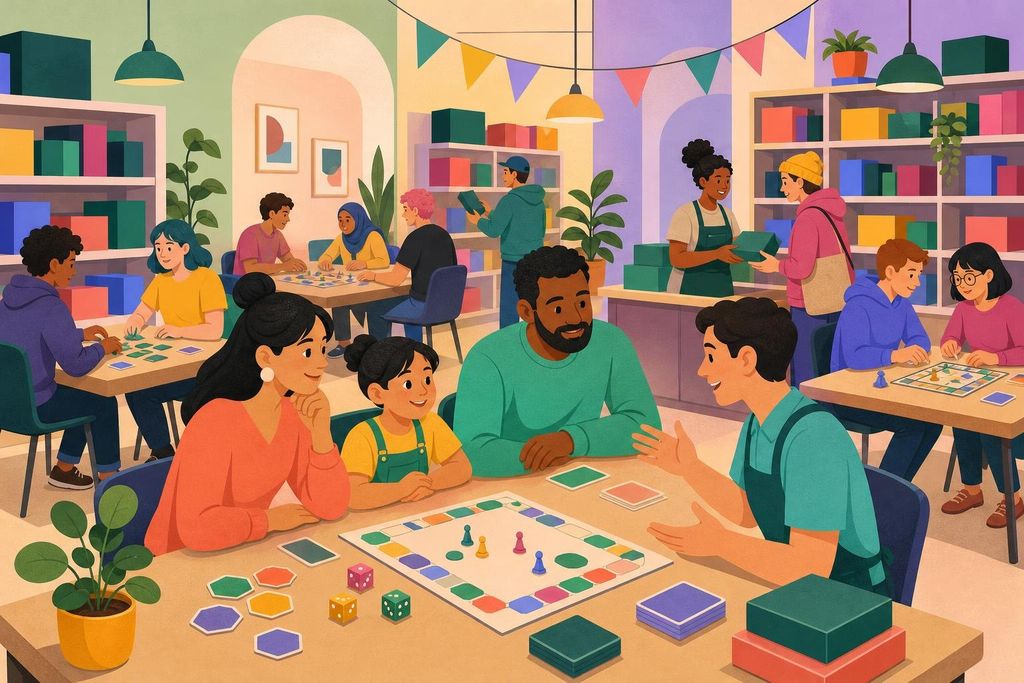
7 daysSunday to Saturday, around Thanksgiving
1 tableis enough to start a demo
Saturdaythe day for a tournament
What game stores did with the week in 2004
When National Games Week started in 2004, specialty stores were the largest group of businesses in it. The first-year tally counted 525 retail stores among 2,536 members, spread across all 50 states. Individual hosts usually held one game night. Stores tended to run something every day of the week, which is how the organizers described it at the time.
The organizers' website let a store list its own events so local players could find them, and it offered a half-page flyer with blank space for the store's details plus two small black-and-white ads a store could drop into its own advertising. That kit is long gone, and nobody hands out flyers for the week anymore. The idea behind it still works: one clear page with dates, times and what to bring, posted at the counter and wherever the store talks to its regulars.
The organizers told hosts who wanted strangers at their table to call a local store first. Many stores had a bulletin board for notices, and the call also told hosts what the store itself was running that week, so they could show up there too.
Sunday and Monday: open the week with demo tables
The quiet start of the week is the best time for demos. Set one table near the window with a game that teaches in ten minutes and plays in twenty. Put a staff member or a confident regular behind it and invite anyone who slows down at the door. A demo is not a sales pitch; it is a short game with a stranger who might come back on Saturday.
Pick demo games from different families so the table looks different every few hours: a tile-laying game in the morning, a light card game after lunch, a party game once the after-school crowd arrives. The guide to the nine types of board games is a handy way to plan that rotation without repeating yourself.
Tuesday and Wednesday: learn-to-play nights
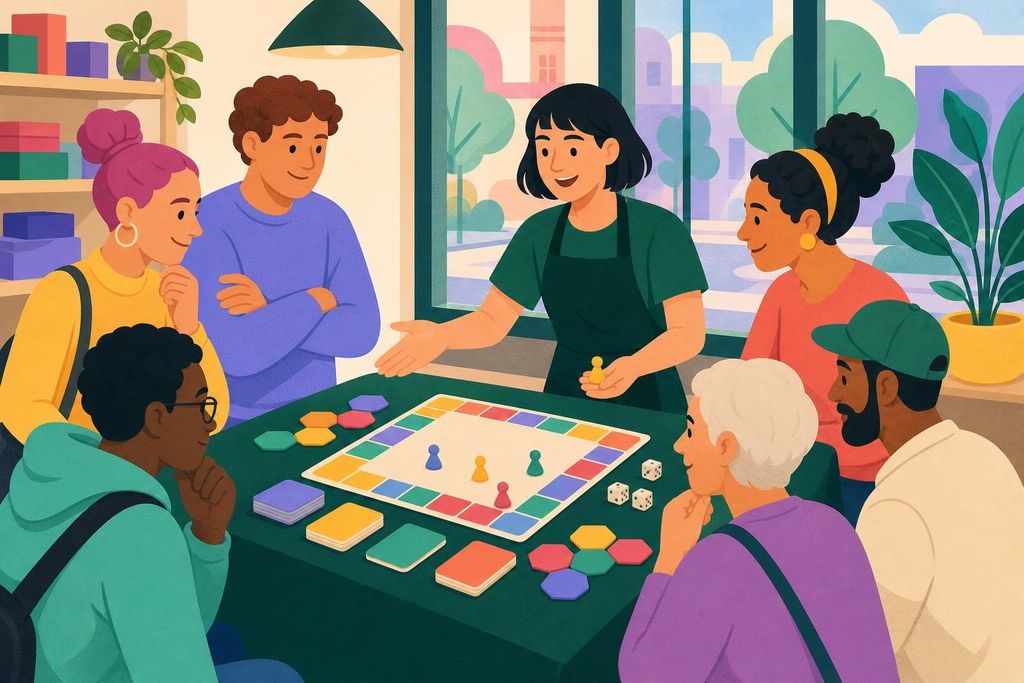
Midweek evenings suit a learn-to-play session for one game, start to finish. Announce the game a week ahead, cap the seats so every learner has a spot, and keep a second copy on the shelf for anyone who wants to buy it after. Two hours is plenty.
College students come home on Tuesday and Wednesday of Thanksgiving week, and a lot of them have a free evening before the family dinner. A Wednesday night aimed at them, with games that seat six or more, often brings in people who used to shop at the store in high school. Many hosts treat the same evening as a warm-up for their own game night at home later in the week.
Teaching a table of strangers
Explain how you win first, then how a turn works, then the one or two ways players get in each other's way. Leave the rare rules for when they come up. Reading from the rulebook kills a demo faster than anything else, so the teacher should have played the game at least twice before the night.
Thanksgiving Day and Friday: a family hour
Plenty of stores close or cut their hours on Thanksgiving Day, and that is fine. Friday is a different story. Families are out, relatives are visiting, and parents are looking for something to do with a mixed group of kids and grandparents that does not involve another screen.
Run a family hour on Friday afternoon with games that seat four to six, take under half an hour and need no reading from the youngest player. Seat staff at two or three tables and rotate families through them. The family game night ideas sorted by age are a good shortlist, and anyone who missed playing at the dinner table can pick up a game from the Thanksgiving games list on the way home.
Saturday: a tournament in the back room
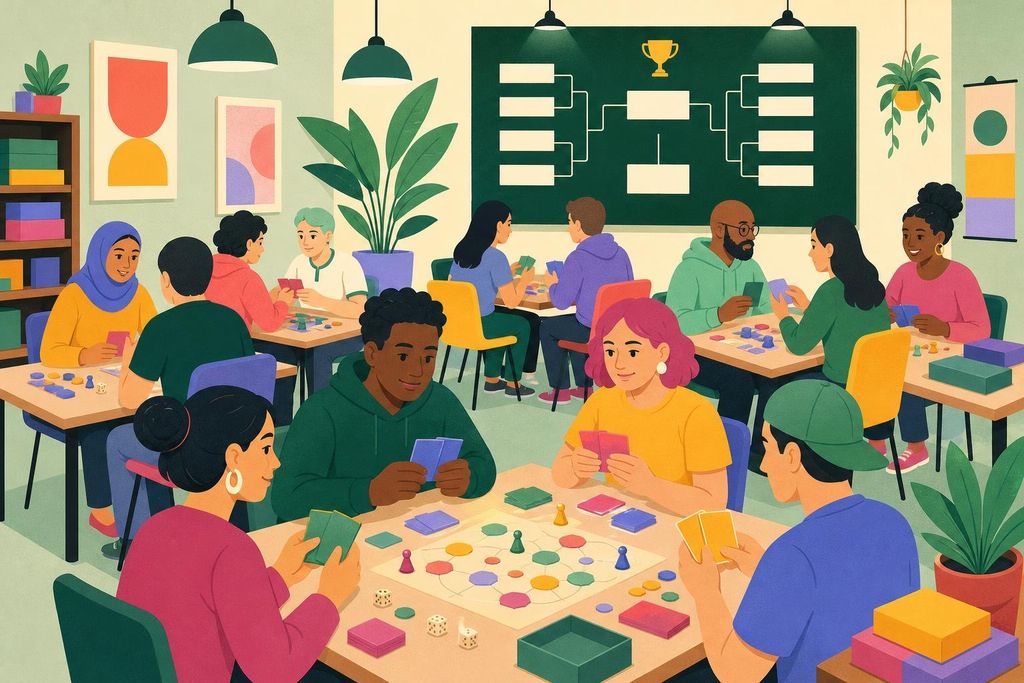
Saturday closes the week, and it is the day regulars expect something with a bit more at stake. A card game or miniatures tournament with three or four rounds fills an afternoon. Keep entry simple, post the pairings on a board where everyone can see them, and decide the round length before the first round starts, not during it.
Leave one open table for people who came to watch. Some of them will sit down for a casual game, and a few will be back for the next event. The 2005 Top 100, built partly from games played at events around the country, leaned heavily toward miniatures and collectible card games, which is a good reminder that tournament players have always been part of the week. The Top 100 list from 2005 shows how strong that crowd was.
How players find a game store event near them
No directory of stores exists for the week today, and none is planned here. The easiest route is still the old one: call or visit the nearest store and ask what it has on the calendar for Thanksgiving week. Most stores post events on their own website or social pages and on a board by the register.
Public libraries are the other place to look, since many run their own tables in November. The library game day guide covers what those look like. If neither turns up anything, ask the store whether you can book a table yourself; plenty will say yes to a small group that plans to play quietly and buy a drink.
A short checklist for the store
Put the whole week on one page and print it by early November. Name a staff member for each event. Check you have two copies of every demo game, one to play and one to sell. Tell your regulars first, because they bring the friends who become new regulars.
One more thing worth doing: be ready to point a family toward a game that suits them even if it is not on your shelf. The 2004 organizers asked home hosts to recommend a store to guests who liked a game. Stores that return the favor get remembered.
FAQ
Questions people ask
What kind of events do game stores run during National Games Week?
The usual mix is demo tables early in the week, learn-to-play evenings midweek, a family session on the Friday after Thanksgiving and a tournament on Saturday. Nothing is required; a store can pick one of these or run all of them. The point is to give people a reason to sit down at a table during the week.
Does a store need to sign up anywhere to hold an event?
No. No organization runs National Games Week today, so there is no registration, fee or approval. A store simply plans its events and tells its customers. The week is kept by anyone who sets up a table, whether that is a store, a library, a classroom or a family at home.
How can players find local game store events near them?
Call or visit the nearest game store and ask what it has planned for Thanksgiving week. Most stores list events on their own website, social pages or a board near the register. Public libraries often run game days in November too, so check the library calendar if no store nearby has anything on.
Are game stores open on Thanksgiving Day?
It depends on the store. Many close on Thanksgiving Day or open for short hours, while the Friday and Saturday after are some of the busiest days of the year. Check the store's posted holiday hours before you go, especially if you plan to play rather than just shop.
What games work best for a store demo table?
Choose games that teach in about ten minutes and finish in twenty or thirty, so passers-by can play a full round. Light card games, tile-laying games and party games all work well. Rotate the game every few hours so the table looks fresh, and keep a copy ready for anyone who wants to buy it.
What did game stores do during the original National Games Week?
Stores were the largest group of businesses taking part, with 525 counted in the first year. Many ran something every day of the week rather than a single night. The organizers' website let each store list its own events and offered a flyer and two small black-and-white ads that stores could add to their own advertising.
How should a game store run a tournament?
Keep entry simple, choose a card game or miniatures game with three or four rounds, post the pairings where everyone can see them and fix the round length before the first round starts. Leave one open table for people who came to watch, since some of them sit down for a casual game.
How can a game store bring in families during Thanksgiving week?
Run a family hour on the Friday after Thanksgiving, when relatives are visiting and parents want something to do that is not another screen. Use games that seat four to six, take under half an hour and need no reading from the youngest player, and rotate families through two or three staffed tables.
Updated