You are invited to a
Game night
- Day
- Time
- Place
- Bring
- Host
National Games Week · Thanksgiving week
You are invited to a
Game night
- Day
- Time
- Place
- Bring
- Host
National Games Week · Thanksgiving week
Nov 22–28, 2026Thanksgiving week
Guide · 8 steps
A plain plan for how to host a game night at home: choose the day, send an invitation, pick board games that teach fast, feed people without fuss and keep score. Two free printables come with it.
3 to 8 playersper table; split into two above that
3 to 6 hourswith a food break past the third hour
2 printablesan invitation and a score sheet
The most useful advice the 2004 organizers of National Games Week gave hosts was also the bluntest: choose the date, the time and the place yourself, then tell people. Do not send a poll asking when everyone is free. Polling the group for dates is how game nights die, because the scheduling thread always outlives the enthusiasm.
If you want a date with a built-in reason, use Thanksgiving week. In 2026 that means November 22 through 28, and relatives who rarely share a room are suddenly under one roof. The dates for every year follow the same holiday rule, so next year's night can go on the calendar tonight.
Timing matters more than most hosts expect. The original tips found that mid-to-late afternoon until about nine in the evening worked best, with a start at five or six running to ten as the runner-up. Anything longer than three hours needs a proper meal break of thirty to forty-five minutes, or the second half drags.
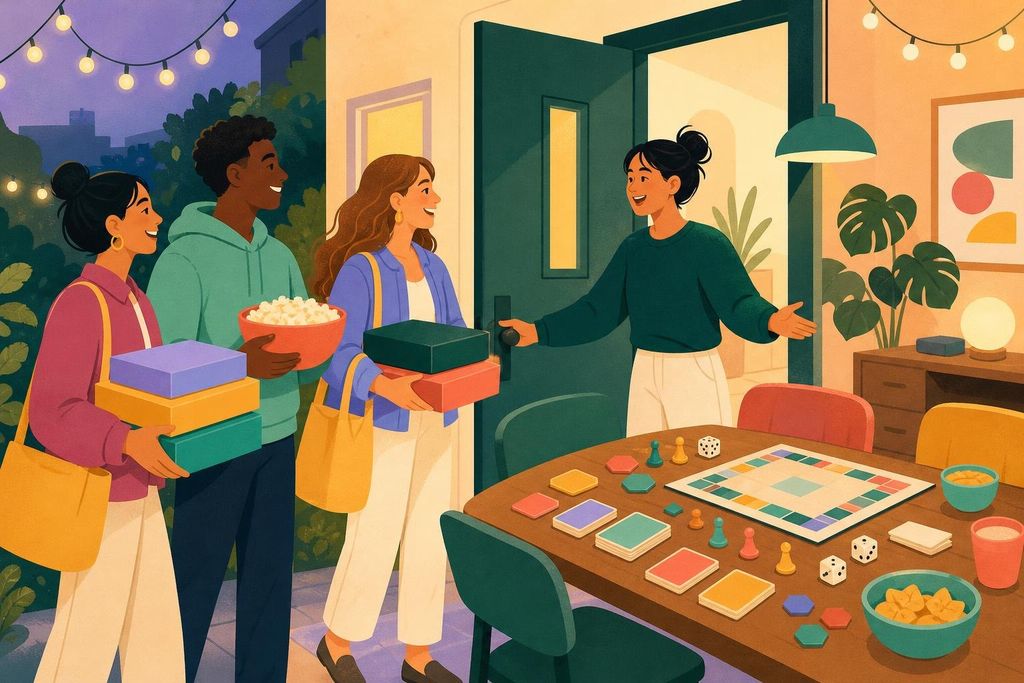
An invitation that arrives on paper tells guests the evening is planned, not improvised. The original organizers recommended mailing them for exactly that reason, and it still works: a card stuck to the fridge gets remembered in a way a group text does not. Hand them out at school pickup or slip them under a neighbor's door if the mail feels slow.
The printable invitation further down has spaces for the date, a start and an end time, the address, what to bring and one line for the games you plan to teach. Fill in the end time. People say yes more easily to an evening with a finish line, and parents can book a sitter.
Two weeks of notice is plenty for an ordinary Saturday. Around Thanksgiving, give a little more, since family calendars fill early.

Half of knowing how to host a game night is matching the games to the guest count. Most board games are designed for three to six players, and a handful stretch to eight. That is the range the 2004 tips pointed hosts toward, and it is a sensible target for one table. With nine or more guests, set up two tables rather than hunting for a single giant game; a second table also gives quieter guests somewhere to land.
Children change the math. If only one or two kids are coming, ask a couple more families so the young ones have company their own age. Expect them to win more often than you think, since kids read a board without second-guessing every move. The family game night guide sorts games by age for a mixed crowd.
Two players: a head-to-head card game such as Lost Cities, or chess. Three to five: almost anything, from Ticket to Ride to Carcassonne. Six to eight: a party game like Apples to Apples or Time's Up, or one cooperative game with a patient teacher. Nine or more: two tables, swapping players halfway through the evening.
Clear more space than seems necessary. A board, a score pad, two card piles and everyone's elbows fill a dining table fast. Put snacks on a side table or the kitchen counter, keep drinks on coasters at the corners, and choose food that is eaten with one hand and leaves no grease on the cards: pretzels, grapes, cut vegetables, cookies.
For anything longer than an afternoon, the original suggestion was a potluck or splitting the cost of delivery, with a slow cooker of chili or stew and a loaf of bread as the host's own part. Guests like being asked to bring something, because it gives them a stake in the night. Ask one person for drinks and one for dessert, and let the rest surprise you.
The original hosting tips recommended having at least one co-host. The reason was practical: when the host sits down to play, someone else answers the door, refills the chips and finds a seat for the late arrival. It also means nobody spends the whole evening explaining rules.
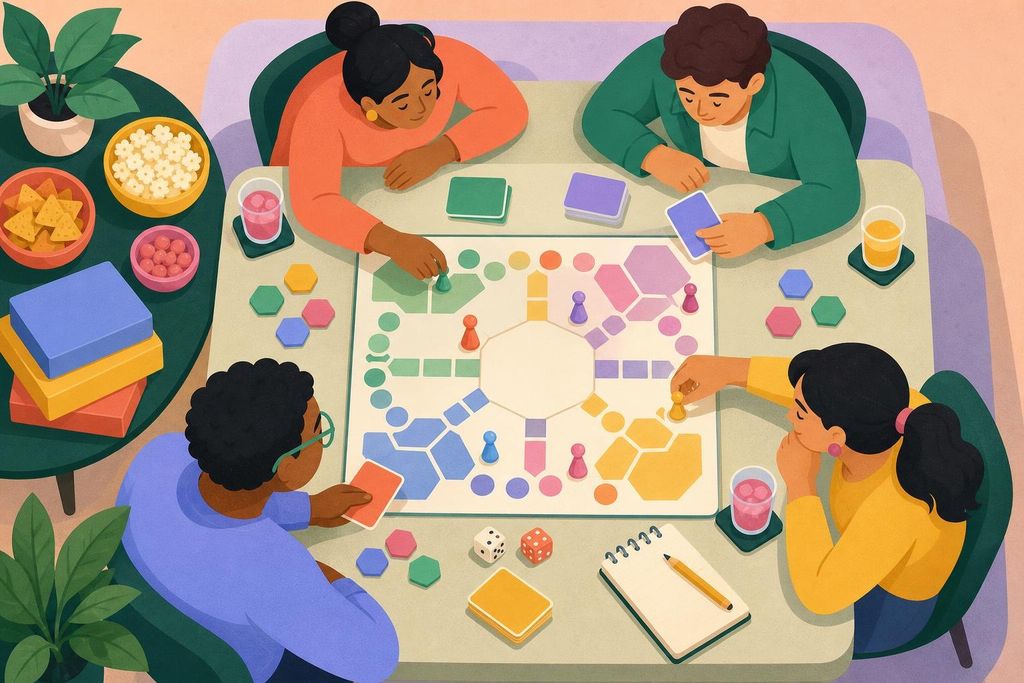
The filter the original organizers used still sorts a shelf well. A game should take twenty minutes or less to learn, ninety minutes or less to play, and work for somewhere between three and eight people. Pair one longer game with several short ones, so the evening has a main course and room for quick rounds around it.
Good ideas from the 2005 Top 100 list include Ticket to Ride and Carcassonne for a calm table, Bohnanza and For Sale for trading and bidding, and Apples to Apples when the room wants noise. Later on, when people are full and a little tired, switch to silly, easy games. Nobody wants to learn a dense economic game at ten o'clock.
If you are unsure what suits your guests, the guide to types of board games explains each genre and how many players it handles. A short list of game ideas on the invitation helps too, because guests who know what is coming arrive curious instead of wary.
Play every game once before the party. That was another of the original tips, and it is the one hosts skip most. Reading a rulebook aloud to six hungry people is the quickest way to lose a table. A solo run-through on the living room floor, playing two hands yourself, takes half an hour and saves the evening.
When it is time to teach, keep a fixed order. Say how someone wins first. Then show what a turn looks like by playing one in the open. Explain only the rules that matter in the opening rounds and leave the rare cases until they come up. Offer a practice round that does not count.
Keep the rulebook within reach, not on your knees. Someone will raise an odd situation, and looking it up together is part of the fun.
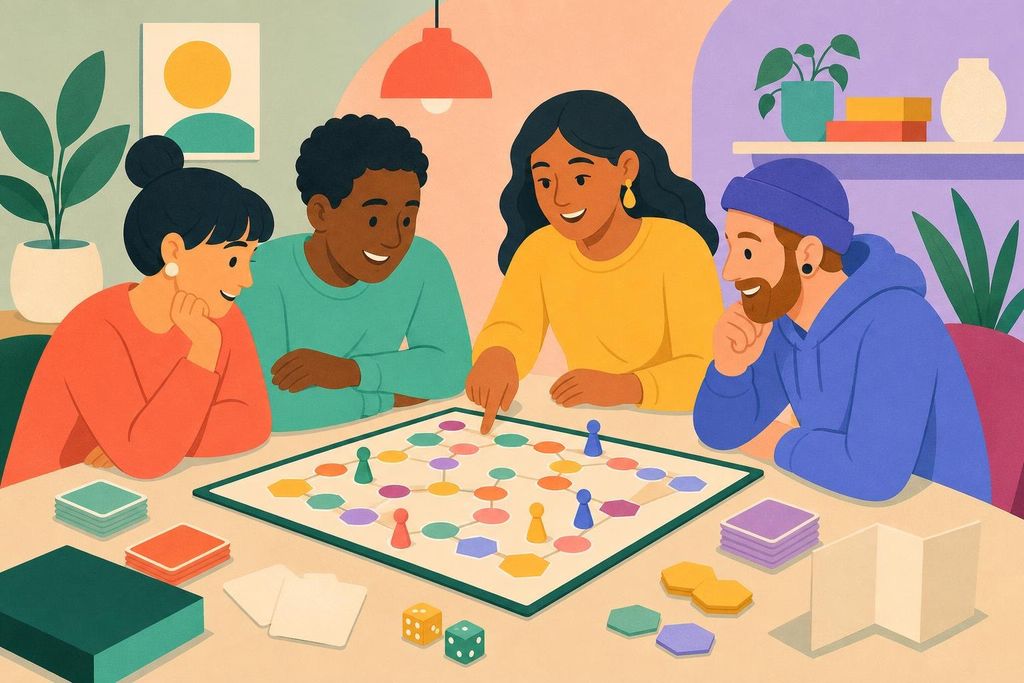
A shared score sheet does two jobs. It spares the tiny pad that came in the box, and it leaves the table a record to laugh about later. The printable score sheet has columns for up to eight players and a row for each round, with space at the bottom for the evening's winner and the game everyone wants again.
For a longer event, run a simple points table across games: three points for a win, two for second place and one for playing at all. It nudges people toward new games instead of replaying the one they keep winning, and it gives kids a reason to stay for another round.
Before people leave, ask one question: which game would you play again? The answer is your shopping list and your next invitation. The organizers of the original week told hosts to be ready to name a store that sells the games played that night, since guests often want a copy for their own holidays. A local game store will usually let you try a title at its own events before you buy.
Then set the next date while everyone is still in the room. A monthly game night survives because it sits on the calendar, not because the first one went perfectly. If yours lands on the holiday itself, the page of Thanksgiving games has rounds for the dinner table that need nothing more than a pencil and a stack of napkins.
Free printables
Both sheets print in black and white on plain letter paper: an invitation with spaces for the date, the times, the address and what to bring, and a score sheet for up to eight players.
FAQ
For one table, aim for four to six guests including yourself. Most board games are built for three to six players, and a few handle eight. If more than eight people say yes, set up two tables and swap players halfway through. That keeps turns short and stops anyone waiting fifteen minutes to move a single piece.
Start with games that are quick to learn and lively to play. Ticket to Ride and Carcassonne suit a relaxed table, Bohnanza adds trading and haggling, and Apples to Apples or Time's Up work for larger groups. Save heavier strategy games for a smaller crowd that has asked for them, and keep one short game ready for the end of the night.
Three to four hours suits most home game nights. The tips from the original National Games Week suggested mid-to-late afternoon until about nine in the evening as the best slot. If you plan longer than three hours, add a meal break of thirty to forty-five minutes so people come back to the table fresh.
Food you can eat with one hand that does not leave grease on cards: pretzels, popcorn, grapes, cut vegetables, cookies. Keep it on a side table rather than next to the board. For a longer evening, a potluck or a slow cooker of chili with bread works well, and guests are usually happy to bring a dish or drinks.
Split the group into tables of four to six, each with its own game and a person who already knows the rules. Party games such as Time's Up or Apples to Apples can bring everyone together at the start or the end. A simple points table across games, three points for a win, keeps the tables mixing all evening.
A table with enough chairs, two or three games you have already played, snacks that are easy to eat with one hand and a way to keep score. A co-host helps more than any extra game: while you sit down to play, someone else can greet late guests and keep drinks topped up.
Yes. Playing every game once beforehand was one of the original hosting tips, and it is the one most often skipped. A half-hour run-through on your own, playing two hands, means you can teach the game in a few minutes instead of reading the rulebook aloud to a hungry table.
Choose the date, time and place yourself and then tell people, rather than polling everyone for a day that suits them. A paper invitation with a start and an end time works better than a group text. The printable invitation further down this page has space for both, plus what to bring and the games you plan to teach.
Updated