Guide · every age
Why play games? Board game benefits for kids, adults and seniors
A board game asks people to sit at the same table, follow the same rules and pay attention to each other for an hour. That turns out to be useful at three years old and at ninety, for different reasons.
Any agefrom counting spaces to bridge night
1 hourof face-to-face attention
0 screensneeded at the table
The case the original week made
The first National Games Week in 2004 opened with a simple ask: switch off the TV, leave the computer for an evening and sit down to a game together. The organizers counted any game people play together, from board and card games to role-playing, miniatures, family and party games. Their argument was social before it was anything else. A game gives a mixed group a shared task and a reason to talk.
That argument has aged well. Screens have moved from the den to every pocket since 2004, and an evening where the phones stay in a basket feels more unusual now than it did then. The rest of this page goes age by age, sticking to the benefits that parents, teachers and librarians commonly point to, and staying away from promises no game can keep.
Benefits of board games for kids
For young children the gains are practical and easy to see. Waiting for your turn is a skill. So is counting six spaces without skipping one, matching colors, and losing a round without throwing the spinner across the room. A simple race game asks for all of that in ten minutes.
The original organizers' school pages listed what they saw board and card games build in children: reading, cooperation, listening, following directions, logical thinking, spatial reasoning and sportsmanship. Those are fair claims for a game played with a patient adult. They also noted something every parent learns quickly, which is that kids often beat the grown-ups.
Preschoolers and early childhood
Between about three and five, short is everything. Pick games with one decision per turn, big pieces and no reading. Memory matching, color and shape games and simple roll-and-move games teach turn order and counting without anyone calling it a lesson. Stop while it is still fun, even if the game is not finished.
School-age kids
From around seven, children can handle a small hand of cards, a bit of planning and rules with exceptions. Word games stretch spelling, and games with money or scoring give arithmetic a reason to exist. The guide to board games in the classroom covers how teachers use them, and the family game night ideas by age list titles for each stage.
Teenagers: strategy, bluffing and an excuse to stay
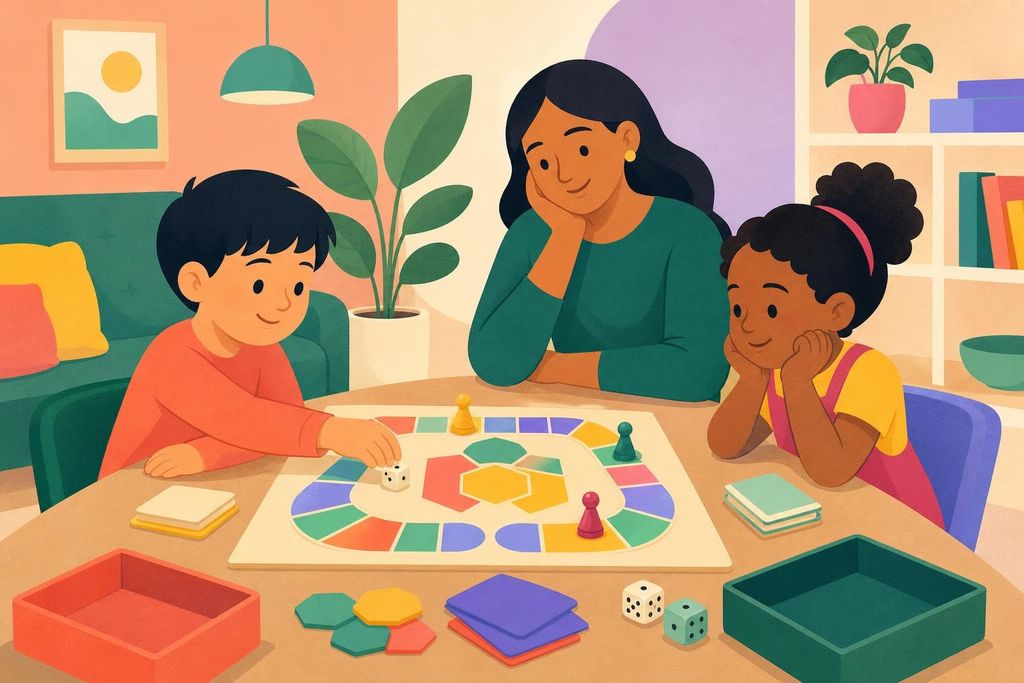
Teenagers rarely want to be told a game is good for them. They will sit down for one that lets them bluff, negotiate or beat their parents outright. Party games, social deduction games and longer strategy games give them a reason to stay at the table after dinner, and a way to be clever in front of the family without it being a test.
Planning several turns ahead, reading what other players want and adjusting when a plan fails are useful skills at any age. At fifteen they come wrapped in the fun of winning, which is the only wrapping that works.
A practical tip for parents: let a teenager choose and teach the game at least once. Being the person who knows the rules changes how they sit at the table, and it usually means they pick something longer and harder than anyone expected.
Benefits of board games for adults
For adults the main benefit is the simplest: an evening of conversation with a structure. A game gives people something to do with their hands and a topic that is not work, politics or the news. Friends who would struggle to fill three hours of talk can play for three hours and leave wanting another round.
Games are also a gentle way to meet people. A store demo table or a library game night puts strangers side by side with a clear set of rules, so nobody has to invent small talk. The game store events guide shows what those weeks can look like, and the guide to hosting a game night covers doing it at home.
Board games for seniors
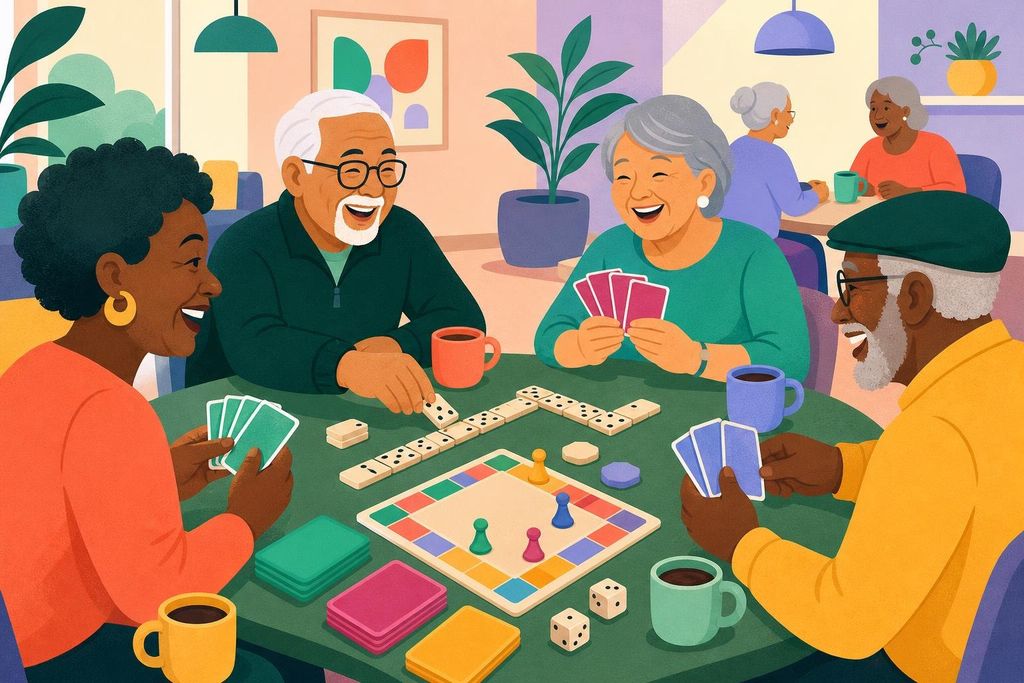
Card tables in community centers and senior living homes have been full for decades, and the reasons are not mysterious. A regular game is a standing appointment with other people. It gives the week a shape, and it brings friends back to the same table at the same hour.
Many older players grew up with dominoes, rummy, bridge, cribbage, checkers and Scrabble, and those games still work. Seniors are often the best teachers at a family table, too, because they have the patience younger players lack. Keep cards large, rules short and the coffee hot. Public libraries often run daytime tables aimed at older adults; the library game day guide explains how they are usually set up.
Games across generations
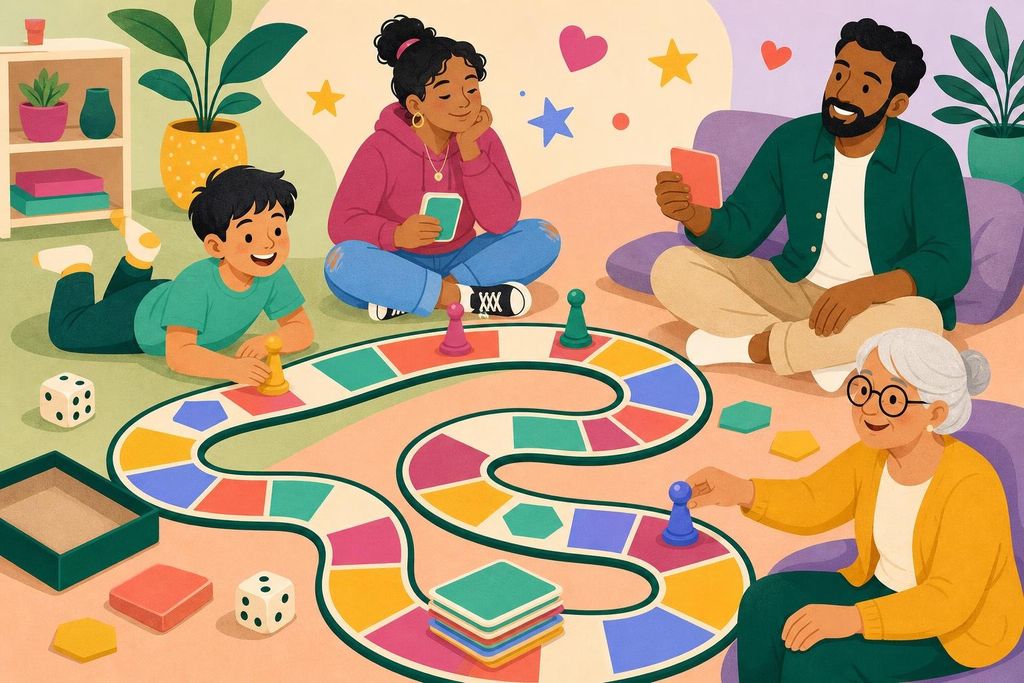
The best table is a mixed one. A grandparent teaching a grandchild a card game, or a teenager explaining a new board game to an uncle, flips the usual roles in a family. Everyone is learning or teaching at once, and nobody is the expert at everything.
This is exactly why the week sits in Thanksgiving week. Families are together, people have time off and the dining table is already set up. The Thanksgiving games for the family table are picked for that mix of ages, and the types of board games page helps match a game to the group in front of you.
What games will not do
A game will not fix a family argument, replace a teacher or treat anything. Benefits come from the time spent together and the attention people give each other, not from a particular box. A game played grudgingly, with one person scolding the rest about the rules, does none of the good things on this page.
So pick something everyone can enjoy, keep the first game short and let people lose without comment. The 2004 organizers had a rule of thumb worth keeping: choose games that take twenty minutes or less to learn. That one habit does more for a game night than any list of benefits.
FAQ
Questions people ask
What are the benefits of board games for kids?
Board games give children practice at taking turns, counting, matching, reading simple rules and handling a loss. Teachers and parents commonly point to listening, following directions and cooperation as well. The gains come most clearly when an adult plays along, keeps the game short and lets the child win or lose without fuss.
Are board games good for preschoolers?
Yes, as long as the games are short and simple. Children of about three to five do best with one choice per turn, large pieces and no reading. Memory, color and roll-and-move games teach turn order and counting. Ten or fifteen minutes is often plenty, so stop while everyone is still enjoying it.
What are the benefits of table games for adults?
For adults, the biggest benefit is social. A game turns an evening into shared time with a clear structure, so conversation comes easily and phones stay away. Games also make it easier to meet new people at a store or library, because the rules give strangers something to do together right away.
What board games are good for seniors?
Familiar games such as dominoes, rummy, cribbage, checkers, bridge and Scrabble remain popular because the rules are already known. Newer games with short rules and large cards also work well. What matters most is a regular time and place, so the game becomes a standing appointment with friends.
Do board games make children smarter?
No game comes with a guarantee like that. What games do offer is practice: counting, reading, planning a move and thinking about what other players want. Those are useful habits. The benefit depends on the time spent playing together, not on any single title, so it is better to pick games the family enjoys.
Are board games good for teenagers?
Yes, when the teenager gets some say. Party games, social deduction games and longer strategy games let teens bluff, negotiate and beat their parents outright, and they practice planning ahead and reading other people along the way. Letting a teenager choose and teach the game is the surest way to keep them at the table.
Why play board games with family?
Because a game gives a mixed group a shared task and a reason to talk. Grandparents teach grandchildren, teenagers explain rules to uncles, and nobody is the expert at everything. The benefit comes from the time spent together and the attention people give each other, not from any particular box.
How do you choose a game everyone will enjoy?
Follow the rule of thumb the 2004 organizers gave hosts: pick games that take twenty minutes or less to learn. Keep the first game short, match the player count to the box and let people lose without comment. The types of board games page sorts nine genres by players, time and age.
Updated